
Atrial Fibrillation Heart Rhythm Screening
Detecting Irregular Heart Rhythms to Reduce Stroke Risk
What is Atrial Fibrillation?
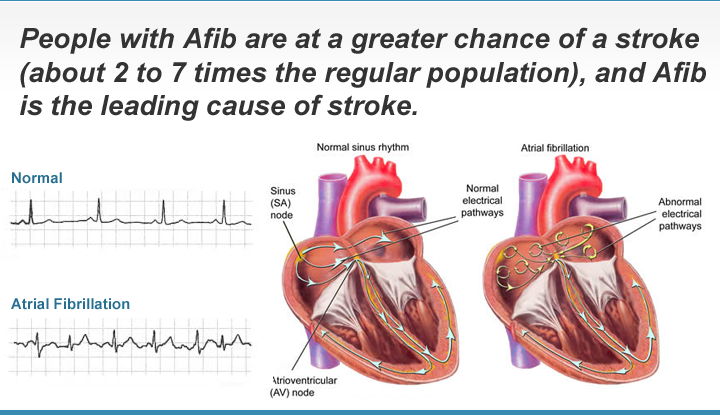
Atrial fibrillation (Afib) is a cardiac dysrhythmia (an irregular heart rhythm) in which there is chaotic electrical activity in the upper chambers of the heart (at 350-600 beats per minute). This causes them to quiver instead of contracting in an organized way. These electrical impulses then travel to the ventricles resulting in an irregular and usually rapid heart rate or pulse.
A person may notice no symptoms of Afib and may not be aware of having the condition until it is identified through a screening or physical examination.
Symptoms
- Feeling of a racing heartbeat
- Tightness in the chest
- Fainting
- Palpitations
Approximately 2.4 million adults in the United States currently have Afib and this is expected to increase to over 5 million by 2040. Afib is seen in every adult age group but the prevalence increases with age.
Afib is the most common arrhythmic cause for hospitalization and is associated with a twofold increase in mortality and a fivefold increase in stroke risk. Individuals with Afib are at a much higher risk of blood clots, which can travel to the brain and cause a stroke or other severe complications.
Purpose
People with Afib are at a greater chance of a stroke (about 2 to 7 times the regular population), and Afib is the leading cause of stroke.
Procedure
The technologist will apply 4 electrodes to your body; two on the wrists and two on the ankles. Then the ECG will take a 10 second measurement of your heart rhythm.